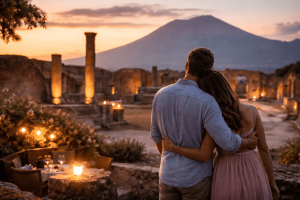
Mount Vesuvius is more than just a volcano: it’s a living ecosystem, a place of silence and memory, a journey through timeless landscapes and ancient atmospheres. Those who choose to explore it beyond the crowded paths discover an authentic side of the Vesuvius area—shaded trails, lava flows that narrate history, breathtaking views over the Gulf of Naples, and a surprising natural environment.
This article guides you through the most off-the-beaten-path nature walks and hidden scenic spots that make Mount Vesuvius a full sensory experience. Ideal for school trips or alternative weekend getaways, this journey complements a visit to Pompeii and its ruins, creating a continuous narrative between nature and history.
Mount Vesuvius: Science, Nature, and the Power of Silence
Vesuvius is the most iconic active volcano in Europe, yet few truly know its lesser-explored sides. The popular trail to the crater is stunning, but there are alternative routes—less traveled but even more thrilling—leading through oak forests, broom-filled clearings, ancient valleys, and abandoned observatories. Walking here means diving into ancestral silence, broken only by the wind and rustling leaves.
Those seeking Vesuvius travel information beyond the typical routes will find a land rich with meaning. Sculptural lava flows recall historic eruptions, while the vegetation—flourishing after each destructive cycle—demonstrates nature’s remarkable resilience.
The Hidden Nature of Vesuvius: Discover Its Unique Flora and Fauna
The Vesuvius National Park protects a surprising variety of plants and wildlife—even in areas close to Pompeii’s ruins. Near the Sanctuary of the Madonna of the Rosary and the Roman Amphitheatre, it’s possible to observe the native flora and fauna of Vesuvius: foxes, hedgehogs, birds of prey, pollinators, and dozens of wild plant species.
On educational trips or guided tours, it’s common to see Etna broom, prehistoric ferns, mushrooms, and wild orchids—especially in spring. Rosemary and myrtle bushes, typical of the Mediterranean, grow spontaneously along many trails, releasing intense aromas. All of this makes Vesuvius an open-air classroom, ideal for interdisciplinary school excursions.
Lesser-Known Trails: 5 Unique Hikes for True Explorers
Beyond the well-known “Trail No. 5” leading to the crater, the National Park offers at least five alternative and captivating routes, still relatively unknown to tourists.
1. Vallone della Profica Trail – One of the most evocative hikes, accessible from Ottaviano. It crosses ancient lava flows and shaded woodlands. Perfect for those seeking silence and unspoiled nature.
2. Historic Vesuvius Observatory – Located on one of the volcano’s first elevations, this neoclassical building houses vintage scientific instruments and offers a panoramic terrace overlooking the Gulf. Often overlooked, it’s a must for science and photography enthusiasts.
3. Trail of the Cognoli – A challenging hike connecting Mount Somma to the crater of Vesuvius, offering spectacular sea views and a lunar-like landscape.
4. Hell’s Valley (Valle dell’Inferno) – A canyon of solidified lava, walkable with proper footwear. A surreal experience, reminiscent of another planet. Avoid during the hottest hours.
5. Matrone Trail – A historical path dating back to the early 1900s, recently reopened. Ideal for families and school groups, featuring shaded areas and rest stops. Offers privileged views of the crater and strong historical connections to the area.
Top Scenic Viewpoints on Mount Vesuvius (Without the Crowds)
Nature lovers and landscape photographers will find unforgettable views across Vesuvius. Away from the main trails, natural terraces and hidden viewpoints are worth the detour. Highlights include:
- The viewpoint between the East and West Cognoli peaks, especially at sunset;
- The terraces of the Vesuvius Observatory, overlooking the entire Gulf of Naples;
- Selected spots along the Matrone Trail with views of Ischia, Capri, and Sorrento on clear days.
These locations are perfect not only for taking stunning photos but also for experiencing a deeper connection with the landscape.
How to Prepare for a Hike on Mount Vesuvius
Planning a hike on Vesuvius takes a bit of preparation, especially if you’re traveling with children or in groups. Here are a few practical tips:
- Comfortable clothing: lightweight hiking shoes, hat, and sunglasses;
- Water and snacks: few rest stops on less-traveled paths;
- Camera or smartphone: to capture the best views;
- Map or offline GPS: some trails are not clearly marked;
- Check the park’s visitor centers for updates on trail conditions and access.
A Complete Journey: From Nature to Ancient History
Visiting both Vesuvius and Pompeii in a single trip enriches the experience. After connecting with nature, exploring Pompeii’s archaeological ruins adds depth to the journey. The two destinations perfectly complement each other.
For those looking for places to stay near Pompeii, accommodations are available near both the archaeological site and Vesuvius Park access points—ideal for exploring both the volcanic and historical sides of the area.
The region also regularly hosts events in Pompeii, including performances, exhibitions, and cultural activities celebrating the local heritage.
FAQ
What are the least crowded trails on Mount Vesuvius?
Among the most recommended: Vallone della Profica, Matrone Trail, Hell’s Valley, Vesuvius Observatory, and the Trail of the Cognoli.
Can you hike Mount Vesuvius with children?
Yes, some trails like Matrone or the path to the Observatory are suitable for families, with proper supervision and equipment.
When is the best time to visit Vesuvius?
Spring and early autumn offer mild weather, lush landscapes, and fewer crowds.
Is Vesuvius open all year?
Yes, but always check weather conditions and trail accessibility, especially during winter or in case of volcanic alerts.
Where to stay to visit Vesuvius and Pompeii?
We recommend checking this guide to where to stay near Pompeii ruins, perfect also for Vesuvius excursions.