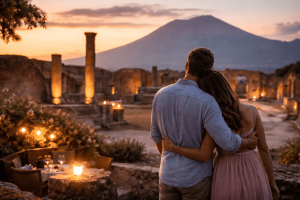
Pompei is far more than its classic image of temples, paved streets, and noble villas: there is a hidden Pompeii, lightly visited, full of silence, surprising details and side paths that tell forgotten stories. This alternative itinerary is designed for those who have already seen the main attractions or for those who want to experience the archaeological area in a more intimate, authentic way, away from the large tourist crowds.
Get ready to uncover corners of Pompeii not featured in mainstream guidebooks, ideal for archaeology enthusiasts, curious travellers or families seeking an extraordinary visit. A route that shifts your perspective: from ordinary tourist to true explorer of the past.
Via dell’Abbondanza… All The Way to the End
Many visitors stop halfway along Via dell’Abbondanza, the ancient city’s main thoroughfare. But walking to its eastern end, toward the Porta di Sarno, transports you to a different dimension: here the crowds vanish, crumbling walls give way to landscape views and the ruins seem almost suspended in time. Along the way, discover lesser-known structures such as the Fullonica of Stephanus (an ancient laundry) or the Temple of Isis, a rare example of Egyptian worship in Pompeii.
The Secret Garden of the Garden of the Fugitives
One of the most touching yet overlooked stops is the Garden of the Fugitives. Casts of 13 victims of the eruption were found here, frozen in the act of trying to flee. What surprises most is the context: a wide garden cultivated with vines and fruit trees using ancient techniques. This is a place where memory and beauty converge—perfect for reflecting on the meaning of time and life.
The Tombs at Porta Nocera
At the southern edge of the archaeological site, just outside the city walls, lies one of the most captivating necropolises: Porta Nocera. Here you can see the tombs of Pompeian families, decorated with statues, inscriptions, and symbols that portray the lives of the deceased. A poetic and quiet place, often overlooked by organised tours, that reveals the deep humanity of ancient Pompeii.
The Gladiators’ Quarter
Not far from the Amphitheatre, in a more secluded zone, lies the Quadriportico of the Theatres, also known as the “gladiators’ training ground.” Here athletes trained before their combats. Today it is a peaceful area, surrounded by porticoes and columns, allowing you to imagine the daily life of these figures so present in popular imagination yet little understood in their real context.
The Suburban Baths (When Accessible)
Not always open to the public, but if you have the chance, the suburban baths represent one of Pompeii’s most refined spaces. Located outside Porta Marina overlooking the sea, these baths were reserved for an elite clientele. The mosaics and frescoes decorating the rooms rank among the most elegant of antiquity.
The Small Theatre: The Odeon
While the Great Theatre hosts crowds and selfie seekers, few pause to visit the Odeon, the smaller covered theatre used for concerts, readings, and recitations. With perfect acoustics and an intimate atmosphere, it’s an ideal place for lovers of art and culture. Often you can sit alone among the ancient seats, listening only to the echo of your footsteps.
Practical Tips for Exploring Less-Visited Pompeii
To enjoy this alternative itinerary, our tip is: start early, walk in the opposite direction from guided tours, and favour weekday mornings. Bring a small printed guide or an offline map, since many lesser-traveled areas lack detailed signage.
Consider returning for a second day. After seeing the iconic spots, a slower, more curious visit can reveal surprising details and completely transform your perception of the ancient city.
If you’re travelling by car, you can consult our guide on how to visit Pompeii by car and choose among the best hotels in Pompeii with parking.
Pompeii’s Natural Side: Ancient Plants and Hidden Biodiversity
Pompeii is not only stone and ash: it’s also nature. Walking among the ruins, you are often surrounded by vegetation rich in Mediterranean species, wild figs, poppies and broom, which at certain times of year burst into vibrant colour. The areas near the Shrine and the green zone around the Amphitheatre, with shaded paths and less-traveled areas, are perfect for observing the spontaneous biodiversity that has slowly reclaimed spaces abandoned by modern man.
Some botanical projects have even reconstructed the original Pompeian gardens, based on fossil seed and pollen analysis. For students and natural science enthusiasts, this offers an additional educational opportunity: to study ancient urban ecology, understand the climate of the time, or reflect on the relationship between humans and landscape in the long term. A botanical itinerary within Pompeii can reveal how the past—even in its most silent details—remains rich with lessons.
Thematic Micro-Itineraries: Symbols, Inscriptions & Hidden Sacred Art
For those seeking a more intimate and reflective immersion, you can build your own journey around thematic micro-itineraries, often overlooked in traditional routes. One example is exploring “minor” sacred art: small votive shrines, household lararia and apotropaic symbols hidden in Pompeii’s alleys offer a different view of daily spirituality. Latin inscriptions hand‑carved on walls—often satirical, poetic or commercial—are a powerful tool for hearing the voices of the town’s inhabitants. Along the route, you can also look for enigmatic symbols like the lucky phallus or stylised hands, true mysteries of Pompeian archaeology.
Another fascinating route is “archaeology of the margins”: exploring liminal spaces such as peripheral necropolises, industrial quarters and city exit roads. These are less crowded but extraordinarily revealing places where you can read the social and commercial dynamics of a vibrant, layered city. They’re ideal for students or families who wish to craft a more personalised and tranquil experience, away from heavy tourist flows.
FAQ – Alternative Pompeii Itinerary
1. What are the benefits of an alternative Pompeii itinerary?
Discovering less-touristy zones allows you to enjoy the experience more authentically and reflectively, avoiding crowds and focusing on details.
2. Is this suitable for visiting with children?
Yes, many of the less crowded spots are ideal for families. You can find suggestions in our guide on Pompeii with kids.
3. How long does the alternative itinerary take?
It depends on your pace: you can dedicate half a day or a full day, or use it as a second visit after the classic tour.
4. Do I need a guide for these routes?
It’s not mandatory, but an expert guide can greatly enrich the experience, especially in areas with limited informational panels.
5. Can I access all these sites with a standard ticket?
Yes, all itinerary points lie within the Pompeii Archaeological Park and are accessible with a regular admission ticket.