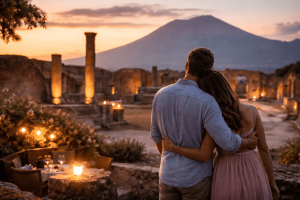
Pompéi lies at the heart of a generous land: sea and mountains face one another, Mount Vesuvius protects and tells its story, and the “sister” Roman cities complete a journey that goes far beyond the Archaeological Park. This guide gathers practical, up-to-date ideas about Pompéi and its surroundings, ideal for travelers with one or more days who want to discover what to see near Pompeii without wasting time on scattered searches.
Each section includes itinerary suggestions, curiosities, and helpful links to in-depth articles from our blog: Visiting Pompeii by car, Pompeii–Herculaneum–Vesuvius Tour, Visiting Pompeii in One Day, Events in Pompeii, Alternative Pompeii Itinerary and Pompeii at Night: What to Do. If you are looking for a central, convenient stay, discover our guesthouse or B&B in Pompeii, just steps from the archaeological entrances.
Pompeii & Surroundings: How to Plan 1–3 Days
In one day, you can visit the ruins and explore the modern city; in two days, add a stop in Herculaneum, Oplontis, or Castellammare di Stabia; in three days, include Mount Vesuvius, MAV Museum, or Pietrarsa to build a rich yet sustainable route. If traveling by car, read our updated advice on visiting Pompeii by car (parking, entrances, best exits).
Read also: how to get to Pompeii from Naples.
The Quieter Side of Pompeii: An Alternative Itinerary
Most visitors walk only the first half of Via dell’Abbondanza, the main ancient avenue. Continuing east toward Porta di Sarno leads to a quieter area with fewer crowds and panoramic views of Vesuvius. Along the way, you’ll find lesser-known highlights full of fascinating stories.
Fullonica of Stephanus & Temple of Isis
The former is an ancient laundry workshop where fabrics were washed and treated in stone basins; the latter is a rare example of Egyptian worship in a Roman city, featuring evocative rooms, delicate decorations, and an atmosphere that reflects Mediterranean cultural exchange.
The Secret Garden of the Garden of the Fugitives
One of the most moving stops is the Garden of the Fugitives, where plaster casts of 13 victims of the eruption were found as they tried to escape. The setting is striking: a reconstructed vineyard and orchard cultivated using ancient techniques—memory and beauty intertwined. For a thoughtful itinerary, read the alternative Pompeii route.
Tombs of Porta Nocera
Just outside the southern walls lies the necropolis of Porta Nocera, a quiet and atmospheric site. Its funerary chapels preserve family stories, inscriptions, symbols, and statues that reveal the deeply human side of ancient Pompeii.
Gladiators’ Quarter & the Odeion
Near the Amphitheatre, the Quadriporticus of the Theatres (Gladiators’ barracks) offers a peaceful break against a backdrop of columns. A short walk away sits the Odeion, the covered “small theatre” with exceptional acoustics—perfect for lovers of art and music. Often quiet, it’s worth sitting a few minutes on the stone seats to reset your travel pace.
Suburban Baths (when accessible)
Not always open, yet among the most refined spaces: elegant mosaics and frescoes, ancient sea views, and rooms reserved for a select public. If you have the chance to visit, plan for early morning or late afternoon. (Openings may vary—check official sources.)
What to See Near Pompeii: “Sister” Archaeology
Herculaneum: Two-Storey Houses & Charred Wood
About 18–20 km from Pompeii, Herculaneum preserves multi-level homes, balconies, and carbonized wooden furniture. The visit is compact and highly educational, excellent for families and students. Consider combining it with the MAV Museum (Virtual Archaeological Museum) for an immersive experience. (Information may change—always verify via official websites.)
Oplontis (Torre Annunziata): Villa of Poppaea
A masterpiece of elite Roman art, the Villa of Poppaea amazes with frescoes and atmospheric rooms. Just minutes from Pompeii: perfect on the same day if you want a complete view of aristocratic private life.
Boscoreale: Local Territory Museum
Small yet valuable, it tells the story of the countryside, villae rusticae, and agricultural life at Vesuvius’ feet. Ideal for families or school trips; often quiet, offering a relaxed visit.
Exploring Pompeii & Nearby: Nature, Sea & Views
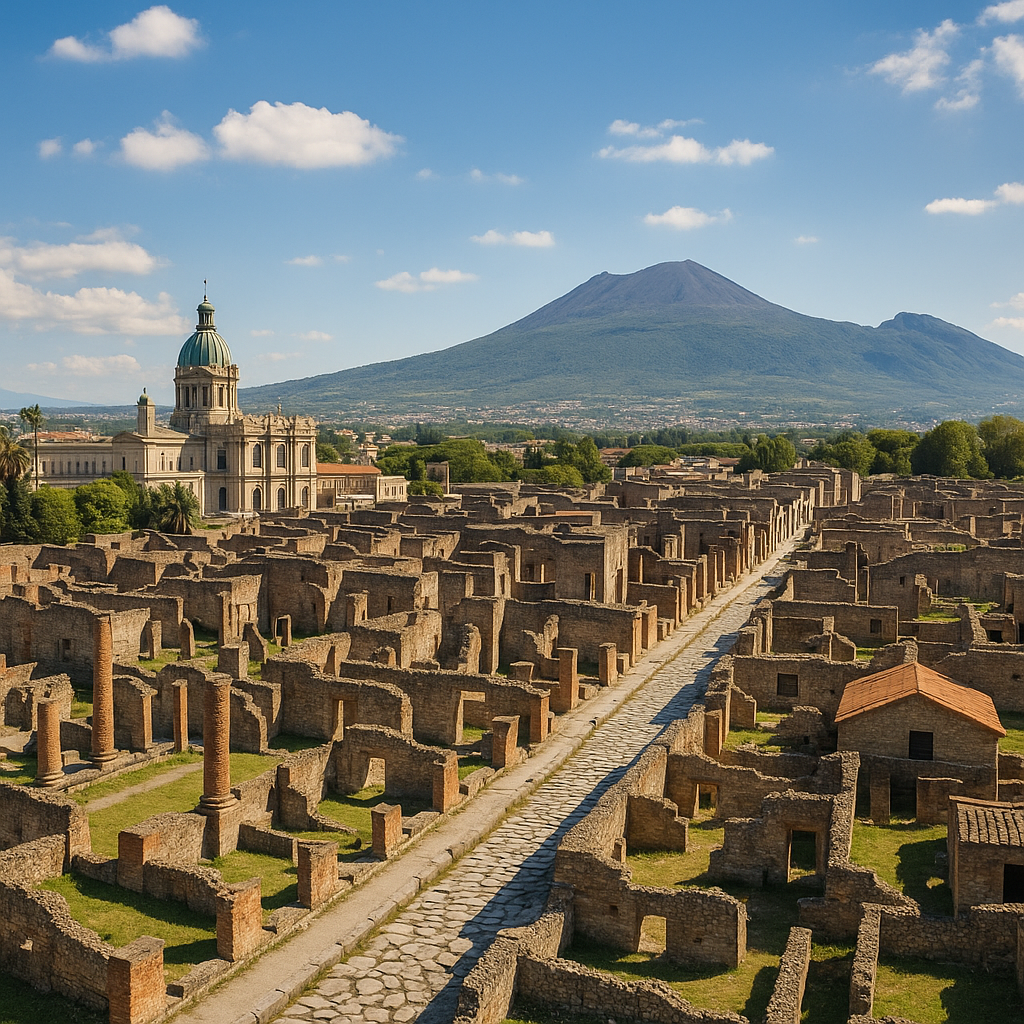
Vesuvius: Trails & Crater
The Vesuvius National Park offers panoramic hiking trails and crater visits with advance booking. An iconic and educational experience—especially if you’ve learned about the 79 AD eruption. To combine archaeology and nature, check our Pompeii–Herculaneum–Vesuvius itinerary. (Opening hours and access conditions may change—verify through official channels.)
Castellammare di Stabia: Villas Overlooking the Gulf
The Stabiae Villas (San Marco, Arianna) overlook the sea with frescoes and gardens. In town, stroll along the seafront or ride the cable car to Mount Faito for sweeping views across the Gulf—perfect for a relaxed afternoon.
Villa delle Ginestre & Pietrarsa Railway Museum
In Torre del Greco, Villa delle Ginestre preserves the memory of poet Giacomo Leopardi and offers a literary glimpse over the Vesuvian landscapes. In San Giorgio a Cremano, the Pietrarsa Museum narrates Italian railway history with historical locomotives and seaside pavilions—ideal for families and science enthusiasts.
Sanctuary of Pompeii: Sacred Art, Devotion & Local Life
The Shrine of Our Lady of the Rosary is a key landmark for the modern city: mosaics, votive paintings, and a large square that bridges devotion and daily life. If you plan your visit on feast days or during processions, take a look at our page about events in Pompeii.
Pompeii at Night: Lights, Flavors & Culture
After sunset, the city changes pace: strolls, music, outdoor cafés, and special routes inside or around the archaeological park. For updated ideas, read Pompeii at Night: What to Do and explore lively neighborhoods to enjoy local cuisine and street food.
Natural Pompeii: Biodiversity & Ancient Gardens
Among the ruins grow Mediterranean essences, wild figs, poppies, and broom shrubs: spring brings vivid colors. Various botanical projects have reconstructed ancient Pompeian gardens through seeds and fossil pollen, offering valuable insights into ecology and climate in antiquity. If you love green paths, explore quieter areas and bring water and a hat.
Micro-Itineraries: Symbols, Inscriptions & Minor Sacred Art
A different way to explore the ruins is by following subtle traces: domestic lararia, small shrines, protective symbols, stylized hands, humorous Latin inscriptions or advertisements. This is “edge archaeology”: peripheral necropolises, productive districts, outbound streets. Ideal routes for curious families and students, especially when paired with a second visit day.
Suggested Mini-Itineraries (1–3 Days)
1 Day – Classics + Quiet Corners
- Morning: archaeological park (Forum, House of the Faun, Amphitheatre) + stop at the Odeion.
- Afternoon: Via dell’Abbondanza to Porta di Sarno, stop at the Garden of the Fugitives.
- Evening: modern center + Pompeii at Night.
2 Days – “Sister” Archaeology
- Day 1: archaeological park + Porta Nocera necropolis.
- Day 2: Herculaneum or Oplontis + seafront at Castellammare di Stabia.
3 Days – Nature, Museums & Views
- Days 1–2: Pompeii + Herculaneum/Oplontis.
- Day 3: Vesuvius (crater) in the morning, Pietrarsa or MAV in the afternoon.
Practical Tips for Exploring Pompeii & Surroundings
- Opening hours & tickets: may change; always check official websites.
- Transport: Circumvesuviana covers local routes; driving is convenient if combining stops (see car guide).
- Weather & gear: hat, water, comfortable shoes; add wind-jacket for Vesuvius.
- Timing: ideally 2–3 days for a relaxed and complete experience.
- Evening: enjoy a food walk (ideas in Pompeii at Night).
FAQ – Around Pompeii
- What can I visit near Pompeii in half a day?
Oplontis or Boscoreale are ideal: compact, educational, and very close. - Can I visit Vesuvius in a day from Pompeii?
Yes. Usually by car or shuttle to the upper parking area, then a short hike to the crater. Times and access may vary; check official sources. - Better Herculaneum or Oplontis after Pompeii?
Herculaneum for multi-storey houses and charred wood; Oplontis for aristocratic frescoes at Villa Poppaea. - Where to stay to explore Pompeii easily?
Close to the entrances—try our guesthouse or B&B in Pompeii for easy walking access to stations and buses. - What to do in Pompeii at night?
Events, strolls, local cuisine—ideas in Pompeii at Night: What to Do.
Note: some openings, hours, and routes may vary depending on weather, maintenance, or regulations. Always check official websites before your visit (Archaeological Park, Vesuvius National Park, local museums).
Useful Links & Official Sources (to verify before your visit)
- Pompeii Archaeological Park – info & notices (hours, special openings) – Official website
- Vesuvius National Park – crater access & trails – Official website
- Virtual Archaeological Museum (MAV), Herculaneum – Official website
- National Railway Museum of Pietrarsa – Official website
Warning: prices, opening times, and access conditions may change. When planning your visit, always check the official website of the relevant institution.