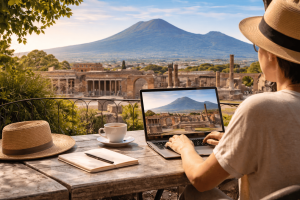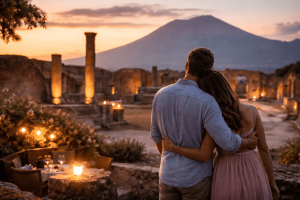
Photography enthusiasts know that some places seem made to be told through a lens. Pompeii, with its sharp light, shadows on the ruins, and contrasts between ancient stone and vibrant nature, is one of them. It’s not just about postcard shots, but about seeking hidden corners, unusual details, and scenes that convey emotions and stories. Whether you’re a professional or simply shooting with your smartphone, this guide will lead you to the most photogenic spots in Pompeii, both inside and outside the ruins.
We’ll start from the archaeological heart and then explore lesser-known glimpses of the modern city, Mount Vesuvius in the background, the interplay of light among the columns, and everyday life blending with history. A visual narrative that unfolds step by step, through alleys, gardens, and markets, until Pompeii at night, when everything transforms into an urban reportage atmosphere.
Iconic shots: where to photograph Pompeii ruins
While it’s true that every corner of the Pompeii ruins offers a memorable backdrop, some places deserve special attention for those looking for the perfect shot. One of the most fascinating is undoubtedly the Forum, the political and religious center of the ancient city. The columns rising against the profile of Mount Vesuvius are the city’s visual symbol, and at sunrise or sunset they gift a spectacular golden light.
Another unmissable spot is the Garden of the Fugitives, where casts of the victims rest in a silent, moving garden—perfect for photos that evoke emotion and reflection. The Quadriporticus of the Theatres, also known as the gladiators’ gymnasium, offers architectural symmetries ideal for geometry lovers, while Villa of the Mysteries, with its vivid frescoes, is paradise for those capturing colors and artistic details.
For quieter, less-traveled corners, the Porta Nocera area and the Street of the Tombs are perfect: among sepulchers and inscriptions, history becomes intimate and shadows create unique atmospheres. Don’t forget the Suburban Baths, when open: the floor mosaics and frescoes provide a stunning color palette.
To access all these areas without stress, staying near the archaeological site is a smart choice. Check out this practical guide on where to stay in Pompeii near the ruins, with strategic options even for travelers carrying photography gear.
The light of Pompeii: when to shoot for the best results
Photography is all about light, and Pompeii offers plenty of it—along with dramatic variations. Midday hours in summer are often too harsh, with high contrasts and sharp shadows. The best times to shoot are sunrise and sunset: the golden hour makes everything warmer, softer, and perfectly balanced for capturing both stone and sky.
If you can stay until evening, don’t miss the night openings of the ruins, when available: artificial lights create dreamlike settings, and the absence of crowds allows for cleaner, more creative shots. Photographing Pompeii at night is an unforgettable experience that delivers stunning results even with a good smartphone.
If you’re driving, plan your moves carefully and check out this updated guide to find the best parking near Pompeii, especially during strategic hours for photography.
The best times of day to photograph Pompeii
Photographers know it well: light is everything. And Pompeii offers truly special light at any season. Early mornings—especially from April to October—bring long shadows, a quiet atmosphere, and fewer tourists. A perfect chance to capture cobbled streets, temples, and frescoes with a more intimate and evocative touch.
Sunset, on the other hand, bathes the ancient stones in warm golden tones, ideal for ambient portraits or high-impact images. In summer, when the Pompeii ruins stay open at night, the magic of illuminated ruins becomes an irresistible call for every photographer.
For urban photography lovers, morning markets or Pompeii at night also offer fascinating glimpses, with artificial lights, retro signs, and shadows wrapping around the streets of the modern city.
Natural Pompeii: a treasure for nature photography lovers
Beyond stone and history, Pompeii is also a source of inspiration for nature photography. During blooming seasons, poppies, wild figs, rosemary, broom, and climbing plants grow among the ruins—perfect for close-ups and color contrasts with ancient walls.
Near the Shrine of the Blessed Virgin of the Rosary and along the renaturalized banks of the Sarno River, you may spot water birds such as herons and mallards—ideal for telephoto lenses and unexpected subjects. The Vesuvius National Park, easily reachable, is another great destination for Vesuvius flora and fauna, with breathtaking landscapes and aerial views of the Gulf.
Many photographers underestimate the biodiversity of the area, but for the observant eye, Pompeii reveals itself as a chest of botanical and wildlife details—even inside the ruins, where nature has slowly reclaimed forgotten spaces.
Photographing Pompeii from above: drones and viewpoints
If you’re using drones, keep in mind that flying over the archaeological site is prohibited without special authorization from the Park. However, there are excellent external viewpoints that let you capture Pompeii from above without breaking any rules.
One of the best is the terrace near the Shrine or the hills south of the city, accessible by car or on foot. For those who love hiking, the Vesuvius trails, particularly those leading to the Vesuvius Observatory, offer breathtaking views of Pompeii and the entire Gulf of Naples.
Want to know where to park comfortably before starting your photo tour? Check out this updated guide to Pompeii parking, with practical and updated info for those arriving by car.
Food photography in Pompeii: capturing flavors too
No photo reportage is complete without the gastronomic side: near the ruins and in the central streets you’ll find markets, historic bakeries, fruit stalls, street food, and trattorias with local dishes worth photographing before tasting.
Shots of hands kneading dough, close-ups of a rum baba, the steam from a freshly baked pizza—details that narrate the soul of a place as much as its monuments. And if you’re looking for where to stay in Pompeii to also enjoy the evenings, choose central accommodations so you can walk out with your camera in hand.
FAQ – Frequently asked questions for photographers in Pompeii
Do I need a special permit to photograph inside the ruins?
For personal use and without bulky equipment, no. For commercial purposes or drone use, authorization is required.
What is the best time to shoot?
Early morning or sunset offer the best light. In summer, take advantage of the night openings of Pompeii ruins.
Can I use a tripod?
Generally yes, as long as it doesn’t obstruct visitors. Avoid crowded areas and ask for confirmation at the entrance.
Are there photography-focused guided tours?
Some tour operators offer tours designed for photographers. Alternatively, you can build your own customized itinerary with photography stops.
What are the best spots for night photography?
The Shrine, central streets, and terraces with views of Mount Vesuvius. If you stay in Pompeii, you can easily explore them at sunset.