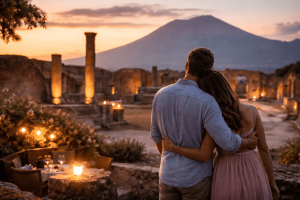
Combining archaeology and nature in one educational experience is entirely possible: just plan an educational trip to Pompeii and Mount Vesuvius. These two iconic sites of Italian history and geology offer extraordinary interdisciplinary learning opportunities for students of all ages.
This article is designed for teachers, educators, and families who want to turn a simple school outing or family weekend into a real journey through science, history, and nature—all within a uniquely inspiring setting.
Why Combine Pompeii and Vesuvius in a School Trip
Pompeii and Mount Vesuvius share a common destiny: the eruption of 79 AD, which froze an entire civilization in time and sparked centuries of volcanological research. Visiting both sites in one trip helps students understand the eruption from both historical and scientific perspectives.
Pompeii offers an immersive experience into Roman daily life: houses, shops, temples, and graffiti reveal a vibrant and surprisingly modern society. Vesuvius, on the other hand, teaches what it means to live near an active volcano and encourages reflection on natural hazards and risk prevention.
To explore student-focused activities in detail, read the guide on how to plan a school visit to Pompeii.
A Complete Itinerary: From the Roman City to the Crater
A typical itinerary begins with a visit to the Archaeological Park of Pompeii, focusing on its most significant landmarks: the Forum, the Lupanar (with age-appropriate sensitivity), the Stabian Baths, and the House of the Faun. School groups can follow thematic routes such as “daily life,” “urban planning,” or “Pompeian art.”
After the archaeological tour, the following day can be dedicated to Mount Vesuvius. The hike to the crater starts at 1,000 meters and is suitable for students aged 9–10 and above. The trek can be guided by a volcanologist who explains the formation of the volcano, its eruptions, and current safety protocols.
The crater’s lunar landscape, panoramic views of the Gulf of Naples, and the awareness of standing on an active volcano leave a lasting impression—ideal for sparking classroom discussions about environment, science, and history.
From Art to Science and Citizenship: Skills Students Develop
A school trip to Pompeii and Vesuvius is not just a cultural experience; it also helps develop key transversal skills included in national education programs—from historical and artistic understanding to territorial awareness, environmental education, and active citizenship.
Students learn to navigate real-life contexts, engage with guides and cultural staff, and manage time and logistics independently. Most importantly, they connect classroom knowledge with real-world experiences: from Pliny the Younger’s writings to understanding a volcanic eruption.
Educational Activities and Workshops Between Excavations and Nature
Beyond self-guided or guided tours, many facilities offer interactive workshops for schools: simulated archaeological digs, reconstructions of Roman environments, Latin writing activities, and even sensory exploration paths.
At Vesuvius, some organizations offer activities like measuring rock pH, using portable microscopes and lenses, or collecting volcanic materials. These experiences encourage students to actively engage with nature rather than passively observe it.
For family trips, these experiences can be adapted for younger children—just follow the tips in the article Pompeii with children to select the best age-appropriate activities.
Practical Tips for Planning Your Educational Trip
For schools, it’s best to book both entry to Pompeii and access to Vesuvius well in advance. Both sites offer free admission for school groups, but a specific request with school details must be submitted.
It’s advisable to avoid the hottest months and plan your trip in spring or autumn for a more comfortable experience. Be sure to bring closed-toe shoes, hats, water, a printed guide for each student, and organize lunch breaks (picnic areas are available near the archaeological park).
For Vesuvius, it’s recommended to have at least one adult for every 10 students. Some buses can reach the 1,000-meter mark, while others stop lower—check this in advance to avoid surprises.
Where to Stay with Students or Educational Groups
Choosing the right accommodation is key to a successful trip. In Pompeii, you’ll find ideal facilities for school groups with shared rooms, activity spaces, bus parking, and half-board options. Some are surrounded by greenery, just minutes from the ruins, and offer safe outdoor areas for students.
To plan your stay, check out our guide on where to stay in Pompeii with a group, featuring options suitable for large families, scouts, associations, or Erasmus projects.
An Experience to Remember and Deepen Back in the Classroom
Once back, the educational trip can inspire group projects, school exhibitions, student-led research, or even podcasts. It’s not just a memory but a truly interdisciplinary educational project.
Pompeii and Vesuvius still have much to teach: they speak of resilience, prevention, responsibility, and wonder. Introducing students to these places—through ancient frescoes and volcanic trails—is perhaps the best way to turn school into a living, breathing experience.